Article last updated: 11.10.2024
Carbohydrates after entering the gastrointestinal tract are broken down and converted into a simpler sugar called glucose.
In addition to food intake, if necessary, it is produced in the body itself through the transformation of other substances.
Glucose is the main source of energy for our cells.
After breaking down the food and absorbing it from the intestine, glucose enters the blood and from there it enters the cells as hormone with the help of insulin.
Terms and Research Units
The level of sugar in the blood or glycemia is measured in two international units.
These are: mmol/L and mg/dL.
Converting is possible with the formulation:
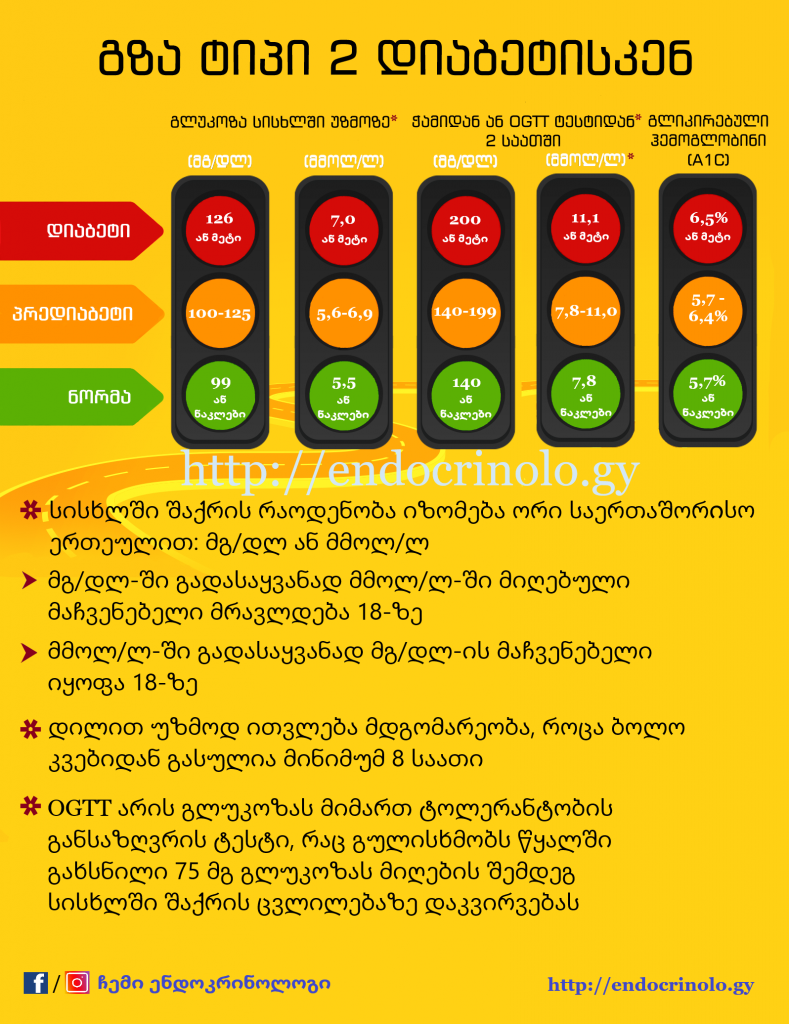
- To convert to mg/dL, the value obtained in mmol/L is multiplied by 18.
- To convert to mmol/L, mg/dL is divided by 18.
Measuring blood sugar levels is an important diagnostic tool for assessing carbohydrate metabolism, detecting diabetes or its precursors, and monitoring the treatment process of already diagnosed diabetes.
To confirm the diagnosis of diabetes mellitus, glucose is measured in blood taken from a vein, and determination of its amount in capillary blood taken from a finger is mainly provided at home in the case of an already confirmed diagnosis for self control.
- A higher than normal level of glucose in the blood is called hyperglycemia;
- Levels below normal – **hypoglycemia**;
- And a normal level is called **normoglycemia**.
There are several ways to assess blood glucose levels:
- Fasting glycemia
- Glucose test 2 hours after a meal
- Glucose tolerance test
- Glucose testing at any time of day, independent of meals.
- Glycohemoglobin test
Fasting glycemia
Fasting is considered a state when at least 8 hours have passed since the last meal.
The interpretation of the results is as follows:
- Normal value: 70 – 99 mg/dL (3.9 – 5.5 mmol/L)
- Prediabetes: 100–125 mg/dL (5.6–6.9 mmol/L)
- Diabetes mellitus: > 126 mg/dL (7 mmol/L)
It should be noted that a few years ago the norm of fasting glycemia was <110 mg/dl. However, according to the agreement of international medical associations, it was reduced to 100 mg/dl. in order to diagnose prediabetes at an earlier stage and take appropriate measures. Early intervention improves the final prognosis and outcomes.
Glucose test 2 hours after a meal
Interpretation of results:
- Reference range: < 140 mg/dL (7.8 mmol/L)
- Prediabetes: 140 – 200 mg/dL (7.8 – 11.1 mmol/L)
- Diabetes mellitus: > 200 mg/dL (11.1 mmol/L)
Glucose tolerance testmeans the examination of sugar for the first time - on an empty stomach and the second time - after drinking 75 mg of glucose dissolved in water 2 hours later. This method is used to clarify the diagnosis in doubtful cases and to detect gestational diabetes.
Glucose testing independent of meals
A normal blood glucose level measured at any time of the day should not exceed 140 mg/dL.
Glycated hemoglobin test (HbA1c or A1c)
The test allows to determine what was the average level of glucose in the blood during the last 2-3 months.
Hemoglobin is a protein in red blood cells that provides oxygen transport in the body. It also has the ability to bind glucose.
This test determines how much percentage of the total amount of hemoglobin is glycated or connected to glucose.
The higher the glucose in the blood, the more hemoglobin is bound to the glucose.
Since the lifespan of hemoglobin is 2-3 months, the essence of this study is to determine the average level of sugar in the blood during the last months.
- Reference range: < 5.7%
- Prediabetes: 5.7 – 6.4%
- Diabetes mellitus: > 6.5%
Glycemic "norms" in the context of a diabetes diagnosis
As for the people already diagnosed with diabetes, in this case we call it the norm only conditionally, however, in reality these are the target indicators of the treatment, the achievement of which is considered to be a successful management of diabetes.
These indicators are generally:
- Fasting blood glucose: 80–130 mg/dL (4.4–7.2 mmol/L)
- Within 2 hours of eating: less than 180 mg/dL (10 mmol/L)
- Glycated hemoglobin: less than 7%
These general target values may be different (more or less) in specific cases and depend on: age, concomitant conditions, ability to reach target values without risk of hypoglycemia and other similar details.
Therefore, the recommendation about the target numbers is given by the attending physician.
Unless otherwise advised by a physician, glycemic control should be maintained within these general targets for successful diabetes management.

Written by: Elga Giorgadze, MD (Doctor Endocrinologist)
Top 3 recommended glucometers on Amazon:
Glucometer Metene
Glucometer AUVON
Glucometer Accu-Chek
Read more:
Guidelines and recommendations for using a glucometer
Factors affecting blood glucose levels
Prediabetes
Related Poster: