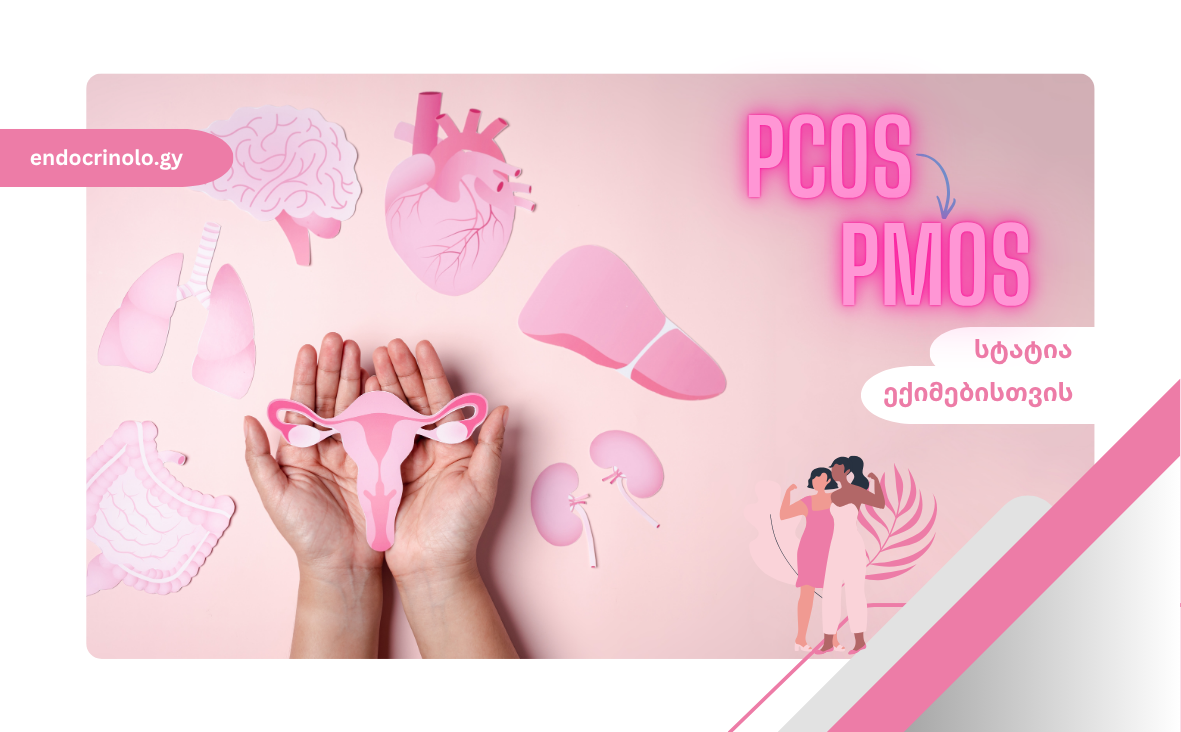
Known as polycystic ovary syndrome (PCOS), the condition is estimated to affect 1 in 8 women, with a total prevalence of 170 million worldwide.
Members of the medical community have long advocated for a name change for the disease (NIH recommendation in 2012), due to the shortcomings that the name "polycystic ovary syndrome" entails and the potential detrimental impact that incorrect nomenclature can have on the management and outcome of the disease.
Why was the issue put on the agenda?
First of all, the name “polycystic ovary syndrome” emphasizes the presence of pathological cystic formations in the ovary, which are not actually cysts – they are normal follicles whose growth is stunted at a certain stage.
The name fails to reflect the complex etiology of the disease, which includes: genetic, endocrine, and metabolic components.
It focuses on only one organ – the ovary, while the disease involves multiple systems.
It omits a multisystemic basis and approach – while it encompasses a range of disorders, such as:
Metabolic – obesity, dysglycemia, Type 2 diabetes mellitus, hypertension, dyslipidemia, steatohepatitis, cardiovascular diseases, sleep apnea.
Reproductive – ovulation disorders, irregular menstrual cycles, infertility, pregnancy complications, endometrial cancer.
Psychological – depression, anxiety, decreased quality of life, eating disorders.
Dermatological – acne, alopecia, hirsutism.
The absence of these important accents in the name often leads to: delayed diagnosis, fragmented management, increased public stigma, as well as a lack of research. According to statistics, more than 70% of cases of the disease remain undiagnosed.
Consensus process
An unprecedented global-scale, rigorously consistent, multi-step agreement process was planned and executed to change the name.
Organizers:: Monash University, Verity PCOS UK, AE-PCOS Society.
Collaboration: 56 leading academic, clinical, and patient organizations from around the world.
Disciplines covered: Obstetrics/Gynecology, Endocrinology, Metabolic Health, Child Health, Pediatrics, Dermatology, Primary Health Care, Psychology, Nutrition, Radiology, Nursing.
Patient organizations: Australia, UK, USA, Europe, Asia, Africa, South America, Middle East.
Principles considered in the process of selecting a new name
Scientific accuracy: Reflection of polyendocrine and metabolic pathophysiology, removal of the imprecise term "cyst".
Scientific accuracy: Reflection of polyendocrine and metabolic pathophysiology, removal of the imprecise term "cyst".
Patient outcomes and outcomes: Promoting diagnosis, awareness, and evidence-based management.
Multicultural Relevance: Using globally acceptable and easily interpretable terms.
Stigma avoidance: Exclusion of reproductive and fertility-related terms in the context of infertility-related stigma for vulnerable regions.
Implementation Implementation: The ability to coordinate transactions across clinical and research practices.
Taking these factors into account, a new term was developed: Polyendocrine Metabolic Ovarian Syndrome (PMOS)
Polyendocrine (P) – reflects complex hormonal disorders (insulin, androgens, luteinizing hormone, anti-Mullerian hormone, adipokines). Evolutionarily similar to the first initial in the old name.
Metabolic (M) – Reflects cardiometabolic load: increased risks of insulin resistance, type 2 diabetes, cardiovascular disease, steatohepatitis, and hypertension.
Ovarian (O) – Anti-Müllerian hormone, folliculogenesis, and steroidogenesis disorders. The term is broader than just the ovary.
Diagnosis
The diagnostic criteria remain unchanged:
In adults over 20 years of age, the diagnosis is confirmed when other nosologies are excluded and at least two of the criteria defined by these international guidelines are met:
- (1) Oligo- or anovulation
- (2) Clinical and/or biochemical hyperandrogenism
- (3) Polycystic ovaries by ultrasound examination or elevated anti-Mullerian hormone.
In adolescents (ages 10 to 19), diagnosis requires:
- (1) oligo- or anovulation; and
- (2) Clinical and/or biochemical hyperandrogenism
- Exclusion of other etiology
So: Polyendocrine Metabolic Ovarian Syndrome (PMOS)
The organizers believe that the scientific evolution and improved precision of nomenclature will increase awareness, diagnostic accuracy, quality of management, research consistency, and overall health outcomes.
The full transition and integration of the new name into the international guideline will be completed in 2028.
Source
Author: Elga Giorgadze (MD of Endocrinology)
(Copying of the article without the author's permission is prohibited)