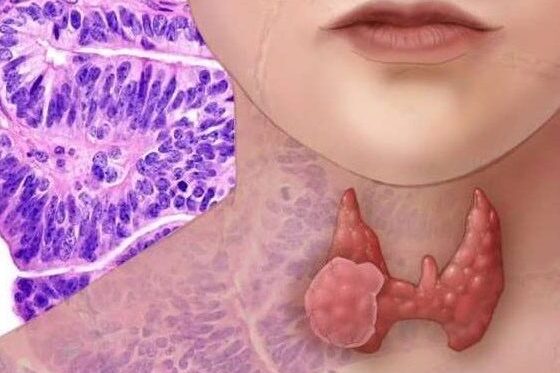
Thyroid nodules are one of the most frequent pathologies in endocrinology. Their discovery scares many people, because the first association is often a malignant tumor. In fact, 90-95% of thyroid nodules are benign and do not pose a threat to life.
The most important task is to determine which nodes need only observation and which require additional examination or treatment.
If you prefer listening to reading, open the informative thematic video on the page's Youtube channel >>>
What is a thyroid nodule?
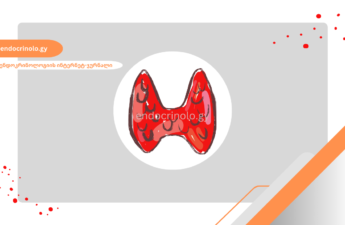
The thyroid gland is a small endocrine organ located in the front of the neck, which produces hormones - thyroxine (T4) and triiodothyronine (T3). These hormones regulate metabolism, heart rate, body temperature, energy expenditure, and affect almost every organ function.
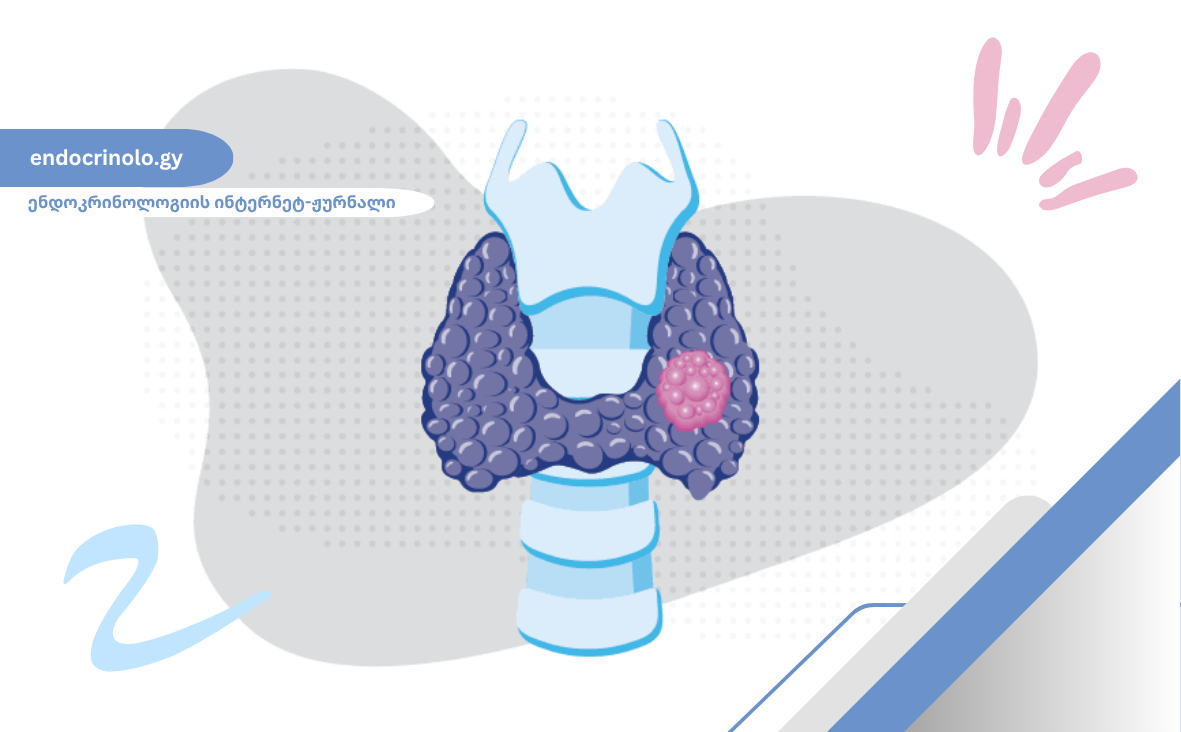
A thyroid nodule is a local formation that differs in its structure from the rest of the gland tissue.
Not all nodes are the same. They differ from one another in both size and structure. For example:
Cystic nodule – it is completely filled with fluid. Its risk of malignancy is very low.
Cystic-appearing nodule – consists of small fluid-filled spaces. Its risk of malignancy is also very low.
Mixed nodules – contain both fluid and tissue components. It is characterized by a low or medium risk of malignancy.
Solid (tissue-composition) nodule – in this case, the risk of malignancy depends on ultrasound features and requires detailed assessment.
Thus, it is important to know that the node is not yet diagnosed.
To arrive at a diagnosis, it is necessary to find out what type of growth it is and whether it requires additional evaluation.
SYMPTOMS
The majority of nodules do not cause any symptoms.
They are often detected incidentally during a preventive ultrasound examination.
Symptoms are more likely to be caused by large nodules. In this case, the following may manifest:
- Sensation of a lump or hardness in the throat;
- discomfort when swallowing;
- Cosmetic deformity in the neck area;
- Rarely – change in voice;
- Also, though rarely – difficulty breathing, particularly when lying on the back.
Nodule and hormones
A thyroid nodule may be a functionally active or "hot" nodule, meaning that it is actively secreting hormones and can become The cause of hyperthyroidism.
Therefore, in addition to the ultrasound examination, to evaluate the node, it is necessary to Hormonal studies too.
The most important initial hormone test is TSH.
If TSH is normal or elevated – in most cases, additional functional testing is either unnecessary, or FT4 and other parameters may be determined depending on the specific situation.
If TSH is low – in this case, it is necessary to consider whether the nodule is producing excessive amounts of thyroid hormones. In such a situation, performing a thyroid scintigraphy may be required.
Scintigraphy makes it possible to determine how actively the node collects the radiopharmaceutical.
A "hot" nodule actively takes up this substance, meaning it produces thyroid hormones. Such nodules are almost always benign.
A "cold" nodule accumulates less of the tracer substance. In such nodules, the risk of malignancy is assessed primarily through ultrasound findings and, if necessary, biopsy.
Who is at higher risk of a malignant nodule?
Closer attention is required if the following are observed:
- Radiation exposure to the neck during childhood or youth;
- Thyroid cancer in a family member;
- Some syndromes of multiple endocrine neoplasia;
- Male gender (nodule is rare, but if detected, the risk is relatively high);
- Age 20–50 for certain types of tumors.
The decisive and most important information, of course, is still obtained from the ultrasound examination.
Important facts about thyroid nodules
Thyroid nodules are very common, especially in women and older people.
Not all nodules are malignant - 90-95% of nodules are benign.
If the nodule is small, it does not mean that intervention is not necessary - together with the size, its ultrasound characteristics must also be taken into account.
A large nodule does not mean it is necessarily malignant, many large nodules are benign in nature.
The presence of a nodule does not mean that the thyroid gland is malfunctioning - in most cases, the hormone levels are completely normal.
Not every nodule requires a biopsy.
The first step is always a quality ultrasound evaluation and determination of TSH
A biopsy does not increase the risk of malignancy and does not cause cancer to "spread" - fine-needle aspiration biopsy is a safe, standard diagnostic procedure.
Ultrasound Assessment: What Does TI-RADS Mean and When Is a Biopsy Necessary?
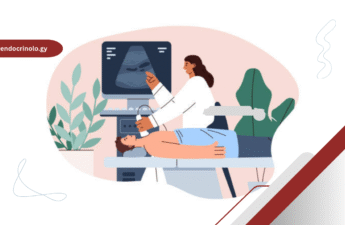
The most important step in evaluating a thyroid nodule is an ultrasound examination.
Today, endocrinologists and radiologists use the ACR TI-RADS system, which assigns a risk category to a nodule based on its ultrasound features.
This system helps us decide whether a biopsy is necessary or whether we can continue with just monitoring.
What does TI-RADS evaluate?
During the ultrasound examination, five key characteristics are evaluated:
- Composition - solid, cystic, or mixed.
- Echogenicity - how dark the nodule is compared to the glandular tissue.
- Shape - usually wider, or "taller-than-wide".
- Contours - whether they are distinct and regular or irregular.
- Calcifications - the presence of microcalcifications is especially important.
The more suspicious signs there are, the higher the TI-RADS category.
TI-RADS კატეგორიები მარტივად
| TI-RADS category | Malignancy risk | RECOMMENDED |
| TR1–TR2 | Very low | Doesn't need biopsy. |
| TR3 | Low | A biopsy is planned only in the case of a relatively large nodule. (≥ 2.5 cm) |
| TR4 | Medium | Biopsy is considered for smaller sizes (≥ 1.5 cm). |
| TR5 | High | Requires detailed evaluation and often a biopsy. (≥ 1 cm) |
What constitutes a comprehensive ultrasound report?
A properly performed ultrasound is the first and most important step in evaluating a thyroid nodule.
It is desirable for the patient's response to indicate:
- Nodule size in three dimensions;
- In which lobe the nodule is located;
- Its structure (solid, cystic, mixed), echogenicity;
- TI-RADS category;
- Presence or absence of suspicious lymph nodes.
This information enables the endocrinologist to decide whether only observation or additional testing is required.
When is a biopsy necessary?
Thus, the decision to perform a biopsy is made based on the ultrasound characteristics of the nodule, the TI-RADS category, the size, and the patient's risk factors.
During a biopsy, a small amount of cells is taken from the node with a fine needle, which is then examined cytologically.
The procedure is usually short and is performed under ultrasound control.
What is the Bethesda system?
Bethesda System for Reporting Thyroid Cytopathology is widely used for evaluation of biopsy results.
Bethesda System for Reporting Thyroid Cytopathology is widely used for evaluation of biopsy results.
| Bethesda | What it means | ზოგადი მიდგომა |
|---|---|---|
| I | Insufficient or non-diagnostic material | A repeat biopsy is often necessary |
| II | Benign | Monitoring is continuing as usual |
| III | Atypia/follicular lesion of undetermined significance | Repeat FNA, molecular testing, or another approach |
| IV | Follicular neoplasia or suspicion of follicular neoplasia | Additional risk assessment, molecular testing, and/or surgery |
| V | Suspected of malignancy | Primarily surgical intervention and assessment |
| VI | Malignant | Planning surgical treatment |
How do we monitor a benign nodule?
If the ultrasound features of the nodule indicate low risk and/or the biopsy response is benign, active treatment is not required in most cases.
At such times, observation in dynamics is used - the doctor periodically evaluates: the size of the node, ultrasound characteristics and anamnesis - do new symptoms appear.
What do we call significant nodule growth?
The increase observed on ultrasound control is especially noteworthy when:
- An increase of approximately 20% or more in at least two dimensions, with an increase of at least 2 mm;
- or an increase in the volume of the nodule of about 50% or more.
However, an increase in size alone does not automatically mean malignancy. If necessary, the doctor re-evaluates the structure and risk category of the nodule and decides whether a repeat biopsy is necessary.
A benign nodule may remain unchanged for years, shrink, or grow slowly. If it does not cause problems and has no signs of malignancy, its presence in itself is not a reason for treatment.
Intervention may become necessary when a benign nodule:
- It increases significantly;
- Causes difficulty swallowing;
- Causes difficulty breathing or compression of the trachea;
- It creates a significant cosmetic problem;
- Despite repeated examinations, it remains clinically suspicious;
- It represents a functionally active nodule and causes hyperthyroidism.
What are the methods of treating thyroid nodules?
Treatment depends on nodule type, size, function, risk of malignancy, and patient symptoms.
Possible approaches include:
- Monitoring;
- Surgery;
- Radioactive iodine treatment;
- In the case of some benign nodules – the use of minimally invasive ablation methods.
Cystic nodules
If the nodule is mostly fluid and causes discomfort, in some cases it can be drained with a needle.
However, aspiration of fluid alone is not always the final solution to the problem – the cyst can fill again.
Ethanol ablation can be used in selected patients, especially for recurrent benign cystic nodules.
Benign but symptomatic tissue nodules
If the nodule is confirmed to be benign, but its size or location causes discomfort, thermal ablation may be considered in some cases in addition to surgery.
These methods use heat to break up the knotted tissue, for example:
- Radiofrequency ablation (RFA);
- Laser ablation;
- Other thermal methods.
These methods are not applicable to all nodules and the decision should be made by the appropriate specialist after ultrasound and cytological evaluation of the nodule.
Medical treatment
In the past, doses of levothyroxine that suppressed TSH were sometimes used to reduce the size or stop the growth of benign nodules.
Today, TSH suppression therapy is no longer recommended for the routine treatment of benign nodules because the potential benefit is limited, and excessive TSH reduction may increase the risk of adverse effects, including atrial fibrillation and bone loss.
Iodine supplementation is not recommended just because of the presence of a nodule. In the case of iodine deficiency, its adequate intake is important, but excess intake of iodine can also disrupt the function of the thyroid gland.
Routine use of selenium supplements is also not a standard treatment for nodules.
When is surgery necessary?
One of the main reasons for surgical treatment is a confirmed or highly suspected thyroid nodule.
Surgery may also be considered for a benign nodule if it:
- Causes compressive symptoms;
- It significantly deforms the neck;
- It is large and growing progressively;
- Repeat tests remain inconclusive;
- It represents a certain type of formation with undefined cytology.
In the case of a functionally active nodule, the choice of treatment depends on the severity of hyperthyroidism, the size of the nodule, the patient's age, concomitant diseases and other factors.
Is complete removal of the thyroid gland always necessary?
The answer is - NO.
In some small and low-risk thyroid nodules, it is possible to remove only the affected half – lobectomy (removal of one lobe).
In cases of higher risk or widespread disease, a total thyroidectomy (complete removal of the thyroid gland) may be necessary.
The extent of the operation is determined individually based on the tumor's:
- Size;
- Localisation;
- Spread on lymph nodes;
- of invasion into neighboring structures;
- and based on other risk factors.
Is radioactive iodine necessary in all cases of thyroid malignancy?
The answer is - NO.
Treatment with radioactive iodine is used selectively today.
Its need depends on the risk category of the disease and how widespread the cancer is.
Some low-risk patients may not need radioiodine therapy at all.
For higher-risk disease, radioactive iodine can be an important part of the treatment plan.
In many cases – yes.
Thus, thyroid nodules are found very often and biopsy or surgery of all of them is an unnecessary intervention.
For each node, its real risk should be determined, and the patient should not be prescribed unnecessary procedures for examination and treatment.
Medical sources used
- American College of Radiology (ACR)
- 2025 American Thyroid Association Management Guidelines for Adult Patients with Differentiated Thyroid Cancer
- 2023 European Thyroid Association Clinical Practice Guidelines for thyroid nodule management.
- The Bethesda System for Reporting Thyroid Cytopathology.
- National Comprehensive Cancer Network (NCCN). Clinical Practice Guidelines in Oncology: Thyroid Carcinoma.
- European Thyroid Association — Image-Guided Ablation in Benign Thyroid Nodules
Author: Elga Giorgadze (MD of Endocrinology)