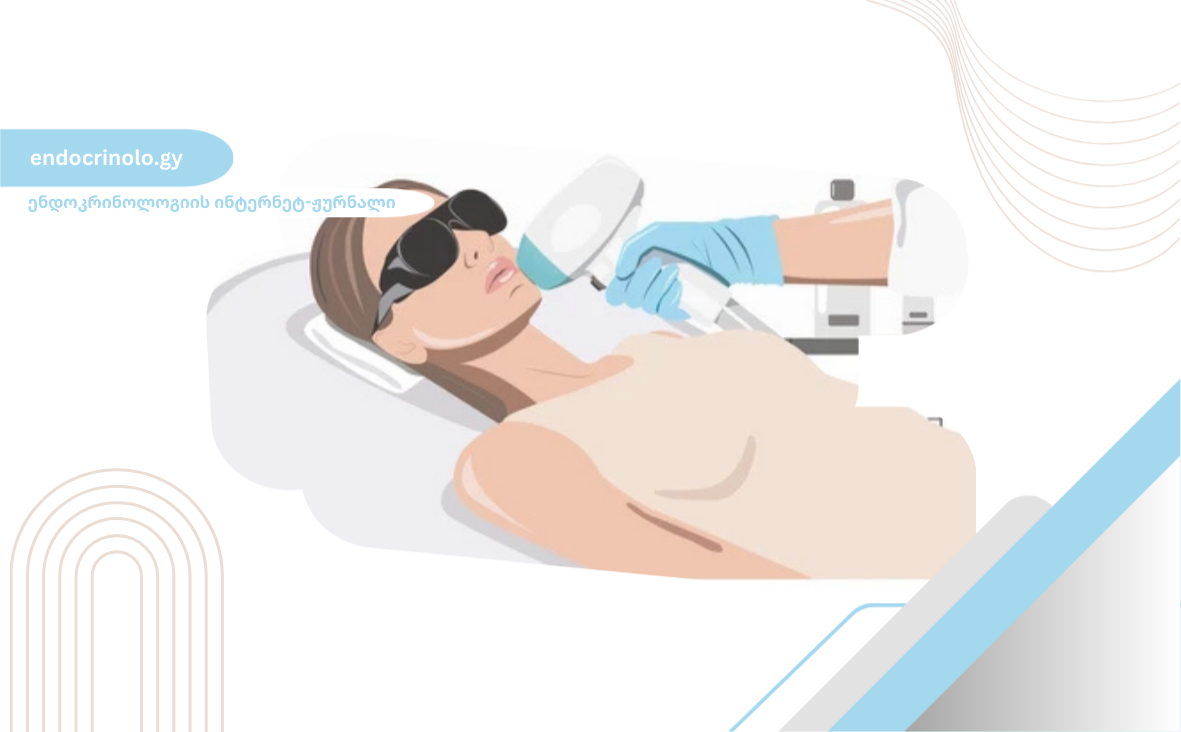
Laser procedures are now widely used in cosmetic dermatology and beyond.
Hair removal, skin rejuvenation, tattoo removal – these procedures are the most in demand.
Endocrinologists are often asked whether it is safe and possible to use this method. In various diseases of the endocrine organs, such as, for example, Nodular goiter, autoimmune thyroiditis and others.
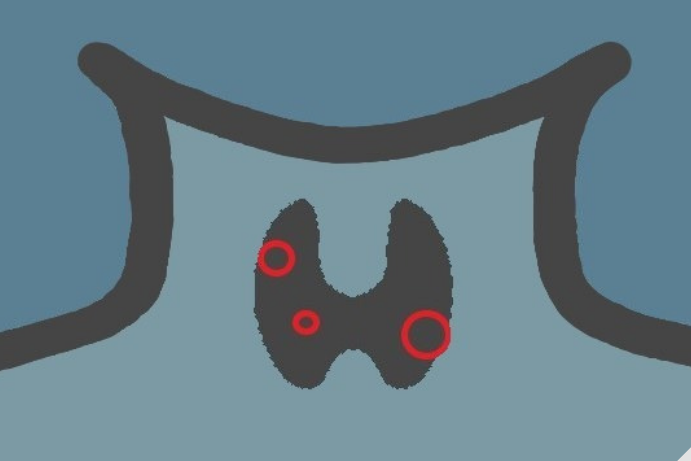
In this regard, The thyroid gland is located on the front surface of the neck close to the skin.
To discuss the safety level of a laser, we must first explain what it is and how it works.
What is a laser
The term "Laser" in English stands for Light Amplification by Stimulated Emission of Radiation.
Simply put, it is a beam of light rays gathered in one direction, which has the ability to produce a strong thermal effect. So strong that in addition to skin care and various medical, including surgical, procedures, it can even be used to cut metal.
General safety
Laser beam belongs to non-ionizing, or non-radiative, radiation, which poses minimal risk to the body when used in low doses.
The depth of action of the laser beam (in the case of alexandrite and diode, approximately 3-4 მმ) as a rule, it does not go beyond the subcutaneous tissue and cannot reach the organs, therefore it lacks the ability to harm them.
Its effects are not associated with structural changes in endocrine organs, nor with functional changes in hormonal indicators.
Laser hair removal
The hair removal process itself is as follows:
Laser beams penetrate the skin to the hair follicles, where they are absorbed by the hair's melanin (the pigment that gives hair its color), where the light energy is converted into heat and damages the follicle, resulting in hair growth being inhibited.
During laser hair removal, the wavelength and duration of the pulses are specifically selected so that it does not go beyond the hair follicle and does not damage the skin.
Side effects and effectiveness
Side effects (mostly temporary) associated with laser procedures may include:
- Prolonged redness of the skin
- Pain and discomfort
- Increased sensitivity
- Itching
- Changes in skin pigmentation
- Scares
- Burning
- Bacterial infections
The effectiveness of the laser hair removal procedure depends on: the professionalism of the performer, the equipment used, the type of procedure, skin type, color and location, the hair growth cycle, and also the hormonal balance status.
The influence of hormonal profile on the results of laser hair removal
Although, as we have already agreed, the use of lasers does not affect the endocrine system, hormones themselves and endocrine disorders have a significant impact on the results of the procedure.
Hormonal changes can cause hair follicles to not respond well to laser treatment. Hormonal changes can also cause hair growth to accelerate, requiring more treatments to achieve the desired results.
Excessive hair growth – male pattern baldness, also known as hirsutism is the result of hormonal imbalance.
Testosterone levels are especially important.
Polycystic ovary syndrome, thyroid dysfunction, adrenal hyperplasia, hyperprolactinemia – these are endocrine disorders that can affect the speed and intensity of hair growth after a laser procedure.
It is essential to identify the causes of hirsutism and treat them. Laser hair removal can only have the desired long-term results in combination with this treatment.
Laser and the menstrual cycle
Laser hair removal is allowed during any phase of the menstrual cycle, including during menstruation itself. The phase of the cycle does not affect the safety and effectiveness of the procedure.
However, it should be noted that during and before menstruation, the body's general sensitivity is increased, and the epilation process may be perceived as more painful and uncomfortable.
Due to the increased sensitivity of the skin, local side effects (redness and swelling) may occur more intensely during this period, which, of course, are temporary and will soon resolve.
Considering these factors, to minimize discomfort, the ideal period for laser hair removal is the next 1-2 weeks after the end of menstruation.
Can laser hair removal disrupt the normal course of the menstrual cycle? There is no medical evidence to support this. For the same reason that the laser beam cannot penetrate deep into the organs, it is not able to affect the functioning of the ovaries.
Laser hair removal in children
Laser hair removal does not generally have a strict age limit for safety. It does not affect sexual maturation in the pediatric population and can be safely used before the onset of the menstrual cycle.
However, an important factor is the issue of achieving the effect of laser hair removal during this period. Because hormonal maturation is not yet complete and the structure of the hair shaft is different; also, due to hormonal imbalance, the hair growth phases are not well established - all this means that the procedure may not have the expected effect.
At a young age, the threshold for feeling pain is also higher.
Based on these factors, it is recommended to start laser hair removal from the age of 12-14.
Using lasers to treat various diseases
The use of laser properties has great prospects in medicine. It has already been implemented and is also being tested for its wider use in the management of various diseases, including endocrine pathologies.
Areas of application of lasers are:
- Dentistry
- Varicose veins treatment
- Prostate, skin and eye surgery
- Dissolving kidney stones
- Treatment of various tumors – including skin tumors.
Author: Elga Giorgadze (MD of Endocrinology)
⚠️ Copying articles without the author's permission is prohibited!